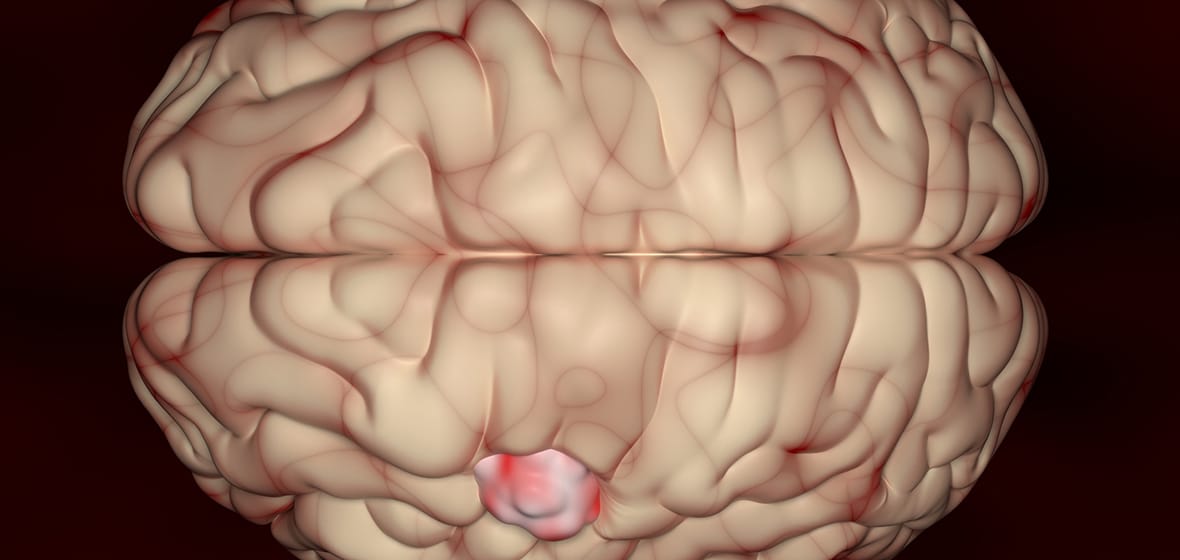
A meningioma is a tumor that starts in the meninges—membrane layers protecting and covering the brain and spinal cord—according to the National Brain Tumor Society. More than 37,000 Americans receive a meningioma diagnosis each year.
The good news is that meningiomas are usually benign (noncancerous). However, some can be malignant (cancerous) or cause health concerns. Meningiomas are graded according to the following:
- Grade 1: Benign
- Grade 2: Atypical (benign, but fast growing)
- Grade 3: Anaplastic (malignant)
There are several different possible causes of meningiomas. Some people develop meningiomas due to having neurofibromatosis type 2, which is a genetic condition.
Symptoms
If you have symptoms, they can vary depending on the meningioma’s size and location. Symptoms may include but not be limited to:
- Feeling like body parts are tingly or numb
- Nausea or vomiting
- Tinnitus
- Hearing loss
- Muscle weakness
- Difficulties with coordination or balance
- Personality and mood changes
- Problems remembering things
- Difficulty seeing
- Seizures (generalized seizures, which impact the left and right sides of the brain, or focal seizures, which only impact one side of the brain)
- Frequent or long-lasting headaches
Treatment Options
Some meningiomas are very slow growing or hardly grow, so they may not need treatment, only requiring a “watch and wait” approach. However, if meningiomas cause health concerns, if they are large or if they are malignant, treatment is needed. Many patients have surgery to remove their meningiomas.
If a meningioma cannot be fully surgically removed, radiation therapy can help shrink the meningioma. Radiation can also help if the meningioma is located next to important parts of the brain or if a patient had a meningioma in the past and it came back. Radiation can be:
- Traditional radiation
- Proton radiation
- Stereotactic radiosurgery
You may be eligible for a meningioma clinical trial. Talk to your care team to see if any clinical trials or emerging treatments exist for meningioma.
Prognosis
The prognosis for meningioma patients is usually good. Prognosis can vary depending on treatment type and whether the meningioma was benign or malignant.
UofL Health is Here for You
Neuro-oncologists with UofL Health – Brain & Spine Institute, who perform services at UofL Health – Brown Cancer Center, have a wealth of experience evaluating and treating patients with primary and secondary tumors of the brain and spinal cord and using the latest techniques and modalities to provide the best care for patients. The team is dedicated to the delivery of excellent patient care through an integrated multidisciplinary approach. To schedule an appointment with our neuro-oncology team, call 502-588-2160.