


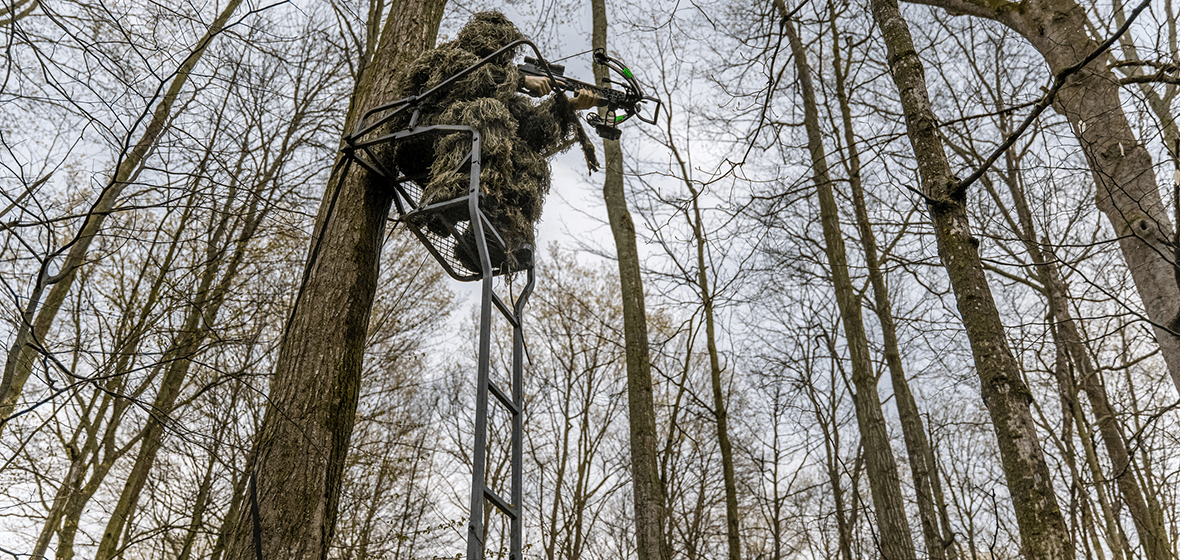
Every year, more than a quarter million people hunt deer in the Bluegrass State, according to the Kentucky Department of Fish and Wildlife.
It’s a tradition many of us look forward to: time outdoors, fresh air and the thrill of the hunt. Behind the excitement lies a danger many hunters may overlook: a fall from a tree stand. A single misstep from 20 feet up can cause a spine fracture, paralysis or worse.
What is a Spine Fracture?
A spine fracture occurs when there has been a break or dislocation of your neck and back bones, called vertebrae. These vertebrae protect your spinal cord, which is responsible for sending messages between your brain and the rest of your body to perform almost every bodily function.
How you land in a fall can decide where the injury happens. For example, landing on your feet can break the bones in your middle (thoracic) or lower (lumbar) back, while landing head-first can cause neck (cervical) injuries.
What are Some of the Common Causes of Falls During Hunting Season?
Some of the most common reasons hunters fall include:
- Falling asleep in the tree stand
- Drinking alcohol before or during the hunt
- Losing balance
- Not using a safety harness
- Using an old or unstable tree stand
- Climbing errors or slippery steps
- Poor visibility at dawn or dusk
How Do You Treat a Spine Fracture?
Spine fractures can vary widely in their severity, which means treatment options can also vary. Some spine fractures can heal with a brace or cast. But when a fall happens from high up, like in a tree stand, it often causes more serious damage that needs emergency surgery.
At UofL Health – UofL Hospital, our trauma and spine teams are ready 24/7 to handle these kinds of injuries. We have a Level I Trauma Center and an experienced group of spine surgeons who treat even the most complex cases.
What Safety Measures Can Hunters Take to Prevent Falls?
Many spine fractures hunters endure can be prevented by following a few safety measures:
- Check your tree stand. Make sure the straps are secured and your ladders are tight. If you are using someone else’s stand, make sure you still check the stand.
- Wear and use safety harnesses appropriately. Always clip in before you climb. If you fall out of your deer stand, your safety harness will prevent you from having a significant injury. Additionally, keeping the height of the tree stand at 10 feet or less is associated with a lower likelihood of a spine injury.
- Always have a way to call for help. Bring your phone and tell someone where you’ll be hunting and when you plan to return, especially if you’re going alone. Keep your phone fully charged and carry a small backup battery if you’ll be out all day. If you lose signal, a whistle, horn or flare can help someone find you faster.
- Follow the “three-point rule”: Always have three points of contact with your ladder. This could be two hands and one foot or two feet and one hand.
- Use a well-built stand for hunting. While homemade or improvised stands may be more cost-effective, they are less safe than commercial stands. Be sure to read and follow all installation instructions.
- Skip the alcohol until after the hunt. It might seem harmless, but even a little can slow your reflexes and make it harder to keep your balance. When you’re already tired from long hours in the woods, that combination can be risky.
UofL Health is Here to Help
UofL Health – Brain & Spine Institute is at the forefront of advanced spinal care, providing a full range of services, including expert consultations and comprehensive imaging. We also deliver cutting-edge treatments for patients needing revision spine surgery and other specialized procedures, ensuring a holistic, patient-centered approach to spinal health. See all our Brain & Spine Institute locations.
If you do end up with a traumatic spinal cord injury, dial 911 or visit a UofL Health – Emergency Department.


